
Candied Fruits in Traditional Pastry: Uses and Artisan Tips
The role of candied fruits and dried fruits in traditional pastry
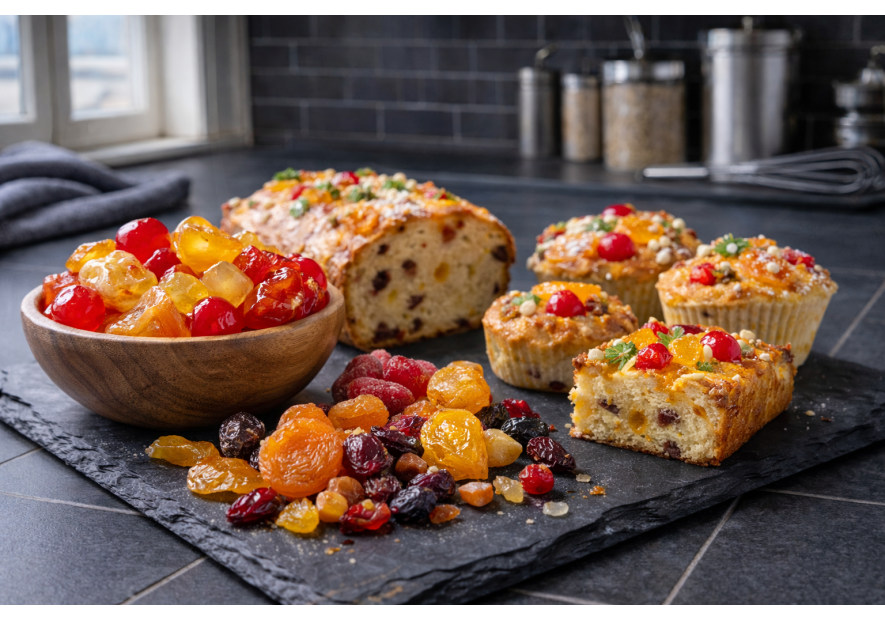
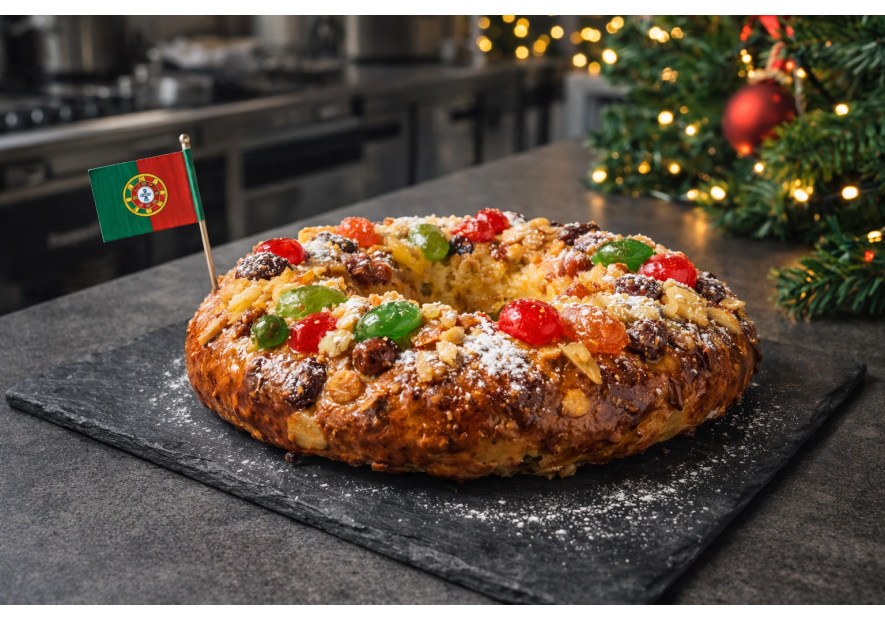
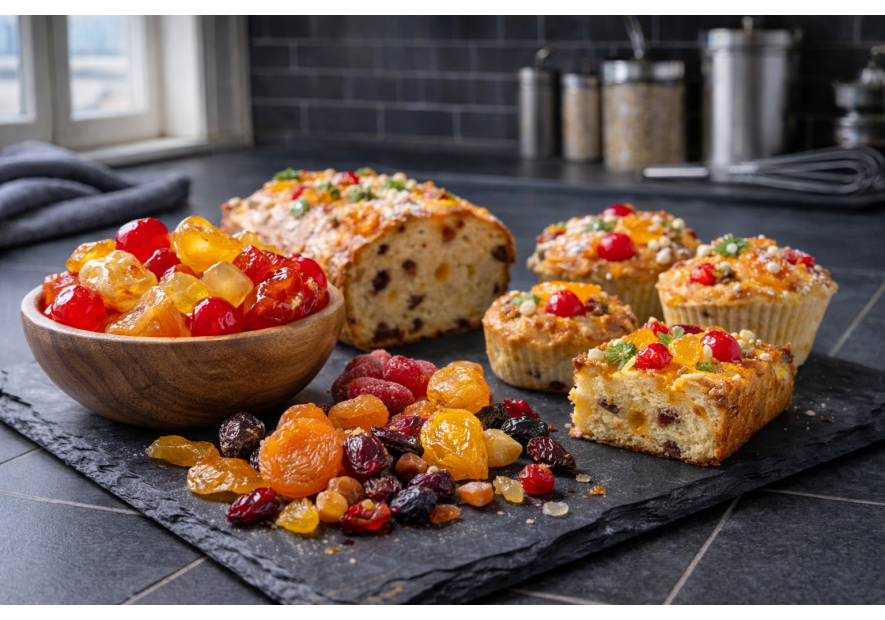
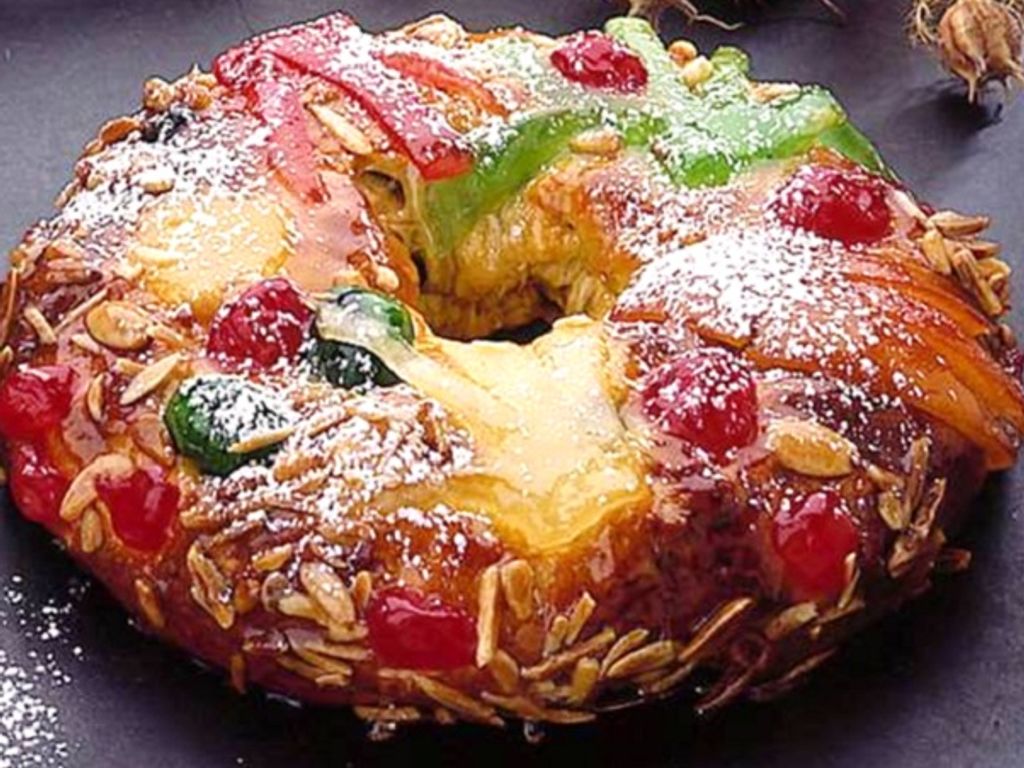
In traditional pastry, candied fruits are not merely decorative ingredients. They play a fundamental technical role in texture, preservation and aromatic balance in emblematic recipes such as cakes, brioche and travel pastries. Understanding their use helps respect tradition while achieving consistent and flavorful results.
In traditional pastry, candied fruits are used because they withstand baking, provide long-lasting moisture and improve the shelf life of cakes, brioche and festive pastries.
This guide provides a complete overview of how candied fruits are used in traditional pastry, from historical techniques to modern artisan practices.
A deeply rooted pastry tradition
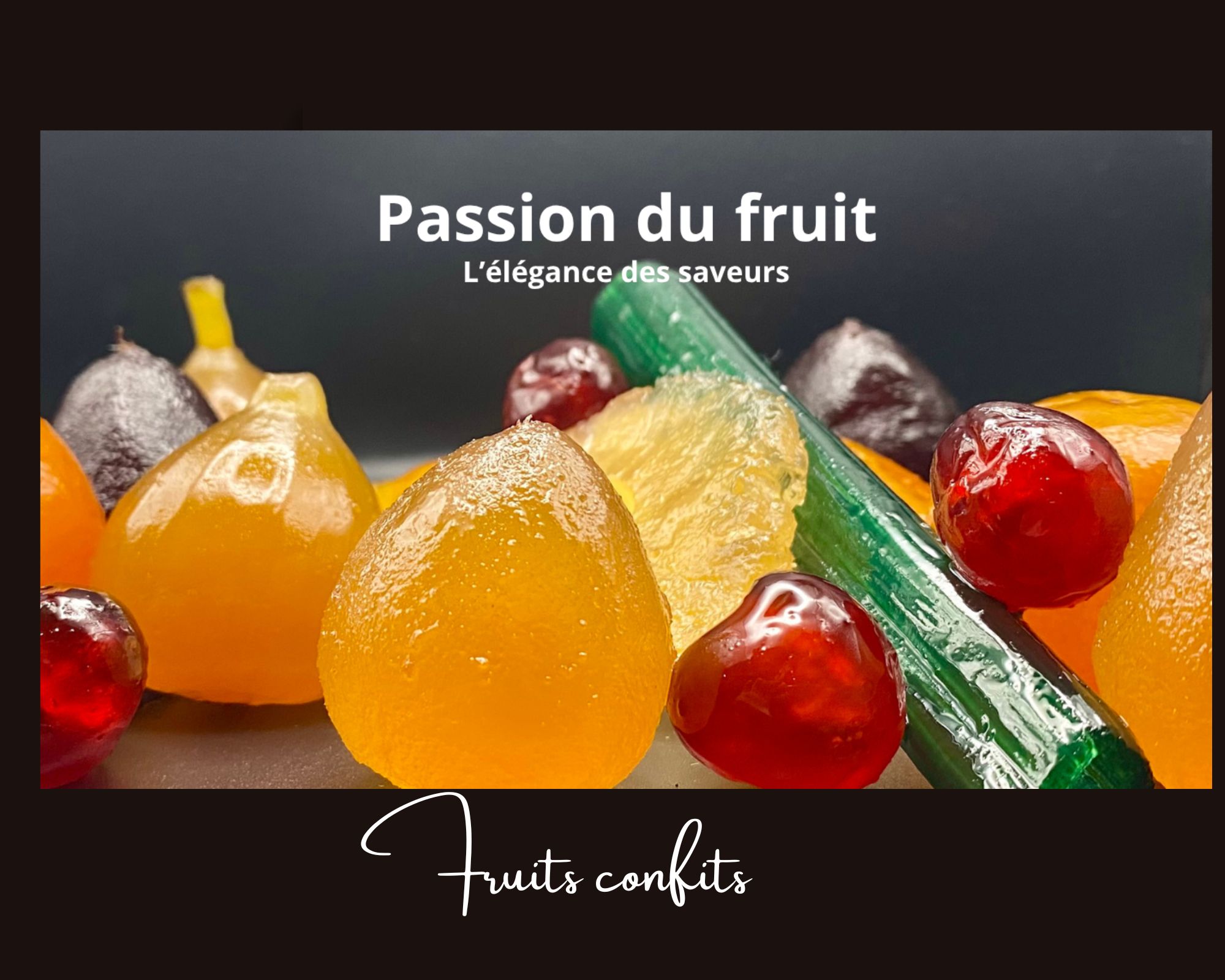
Before modern preservation methods existed, candying was used to extend the life of fruits while preserving their flavor and texture. This technique gave rise to many iconic recipes in French pastry, designed to remain enjoyable for several days or even weeks.
In southern France, particularly in Provence, fruit abundance and favorable climate contributed to the development of true craftsmanship around candied fruits, which remain inseparable from traditional pastry making today.
French pastry traditions have strongly influenced the use of candied fruits in artisan baking worldwide.

Why candied fruits are essential in pastry
Candied fruits meet specific technical requirements that few ingredients can replace. They are used to ensure consistency, stability and repeatability in pastry recipes.
- Excellent resistance to baking
- Long-lasting moisture
- Progressive and balanced aroma release
- Visual stability and even texture
- Improved shelf life of cakes and pastries
For these reasons, candied fruits suitable for traditional pastry are widely used in fruit cakes, brioche and long-keeping pastries.
Candied fruits, dried fruits and dehydrated fruits: what are the differences?
These three fruit categories are often confused, although they serve very different purposes in pastry making.
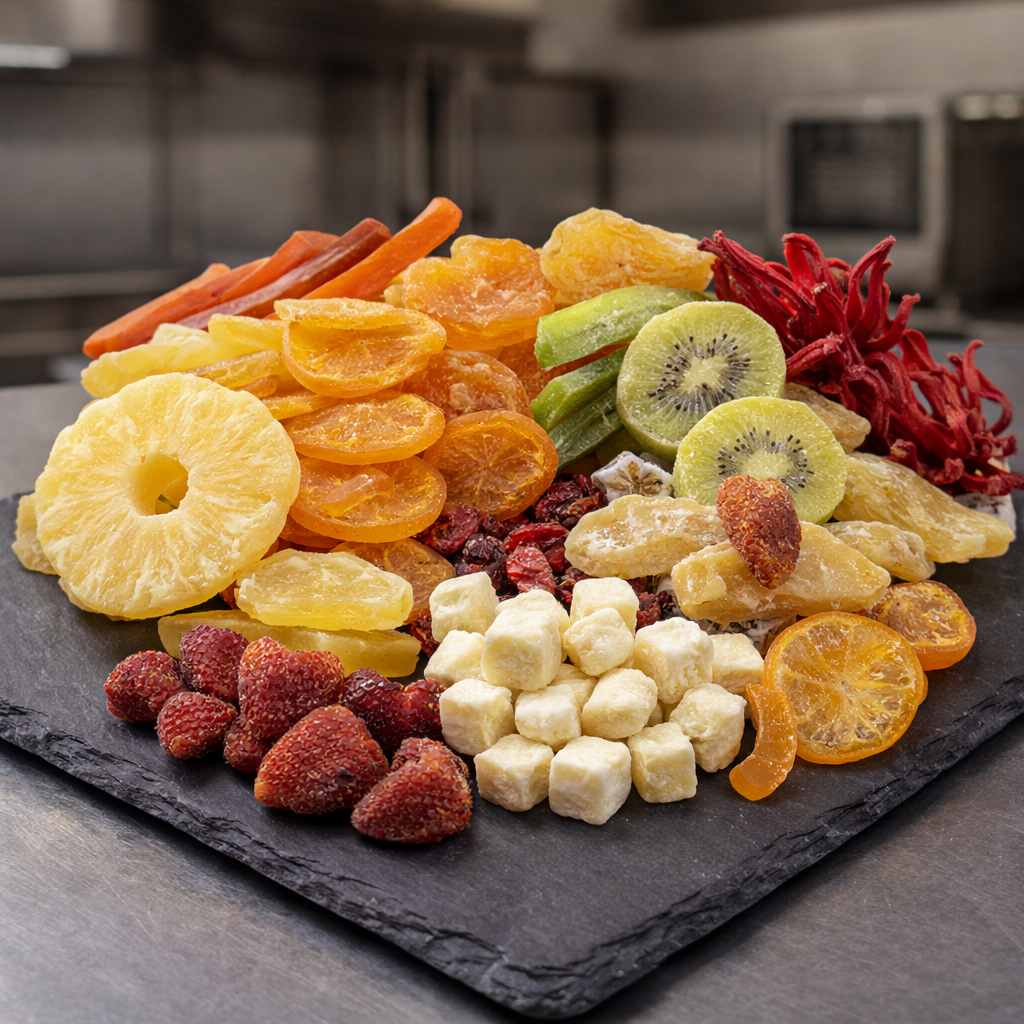
- Candied fruits: infused with sugar, they remain soft and withstand long baking times. Candied orange slices used in artisan pastry are especially appreciated for their baking stability and aromatic diffusion.
- Dried fruits: mainly used for crunch, texture or decoration.
- Dehydrated fruits: gently dried at low temperature, they offer a more intense, fresh and expressive aromatic profile.
Artisan tips for successful pastry with candied fruits
Success in pastries with candied fruits depends as much on ingredient quality as on proper handling. A few simple techniques help avoid common mistakes.
Preparing candied fruits correctly
- Cut fruits into evenly sized pieces
- Lightly dry them if they appear very glossy
- Lightly coat them with flour for better distribution
Preventing fruits from sinking to the bottom
- Add fruits at the end of mixing
- Use a sufficiently structured batter
- Adapt fruit size to the type of pastry
A modern interpretation of tradition
Contemporary pastry builds upon tradition to reinterpret it. Candied fruits ensure moisture and structural stability, while dehydrated fruits add freshness and aromatic contrast.
Many artisans now combine candied fruits with dehydrated fruits for pastry to create more balanced, expressive and modern recipes.
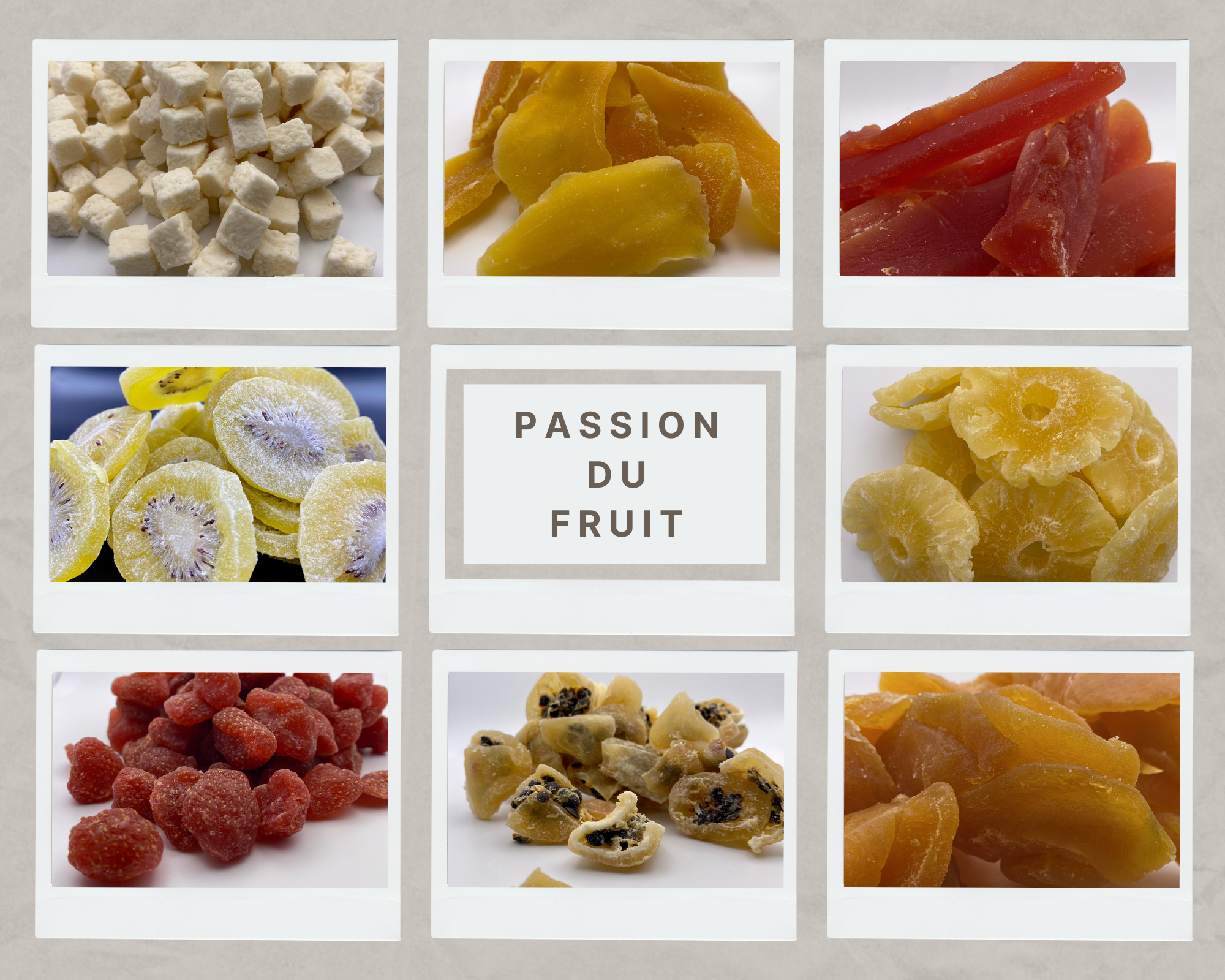
At Passion du Fruit, we carefully select and prepare candied fruits and dehydrated fruits specifically designed for artisan pastry use, focusing on natural quality, consistency and aromatic balance.
This article is part of a broader editorial series dedicated to candied fruits and artisan pastry, exploring techniques, ingredient selection and recipe applications.
Frequently asked questions about candied fruits in pastry
What are candied fruits used for in traditional pastry?
Candied fruits provide moisture, baking stability and consistent aroma in cakes, brioche and long-keeping pastries.
What is the difference between candied fruits and dehydrated fruits?
Candied fruits are infused with sugar and suitable for long baking, while dehydrated fruits are simply dried and offer fresher, more intense aromas.
Why do candied fruits sometimes sink in cakes?
This usually happens when the batter is too liquid or fruit pieces are too large. Lightly coating the fruits with flour helps prevent this issue.
Should candied fruits be rinsed before use?
No. Rinsing removes protective sugar and aromatic compounds. It is better to simply drain them if necessary.
Can candied fruits and dehydrated fruits be combined in the same recipe?
Yes. This combination is increasingly used in modern pastry: candied fruits provide moisture and structure, while dehydrated fruits add aromatic complexity.
Are candied fruits only used for festive pastries?
No. Candied fruits are widely used in everyday artisan baking, particularly in travel cakes and pastries designed to keep well.
Why are candied fruits so important in French pastry tradition?
They allow fruits to be preserved while maintaining texture and flavor, making them essential ingredients in the development of French pastry heritage.
In summary
Candied fruits are a cornerstone of traditional pastry. They ensure texture, preservation and aromatic richness in classic recipes. Knowing how to choose and use them properly allows bakers and pastry chefs to respect tradition while creating stable, flavorful and lasting pastries.


Leave a comment